Japanese Professor Urges: “Do Not Be Late and Have Purpose!”
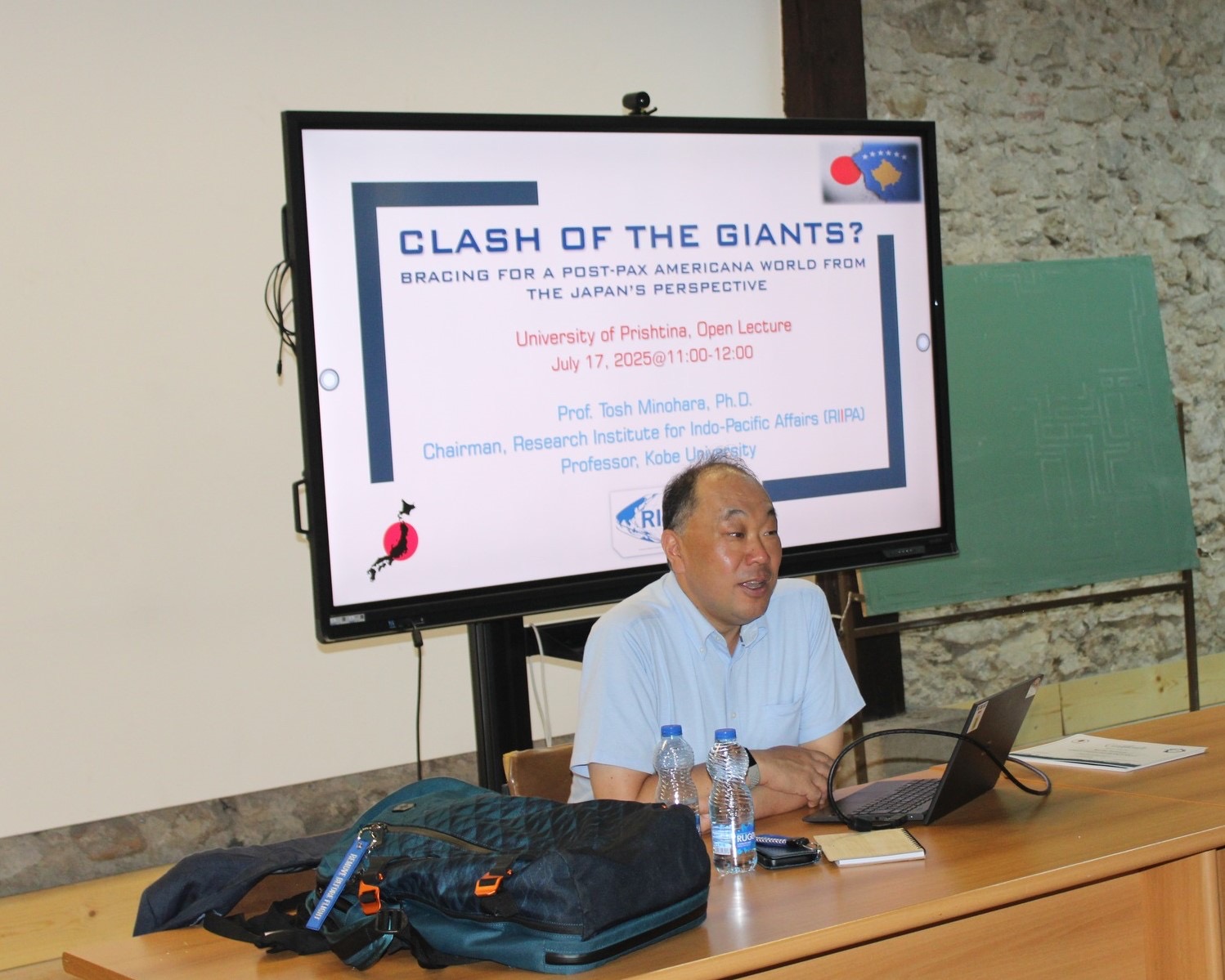
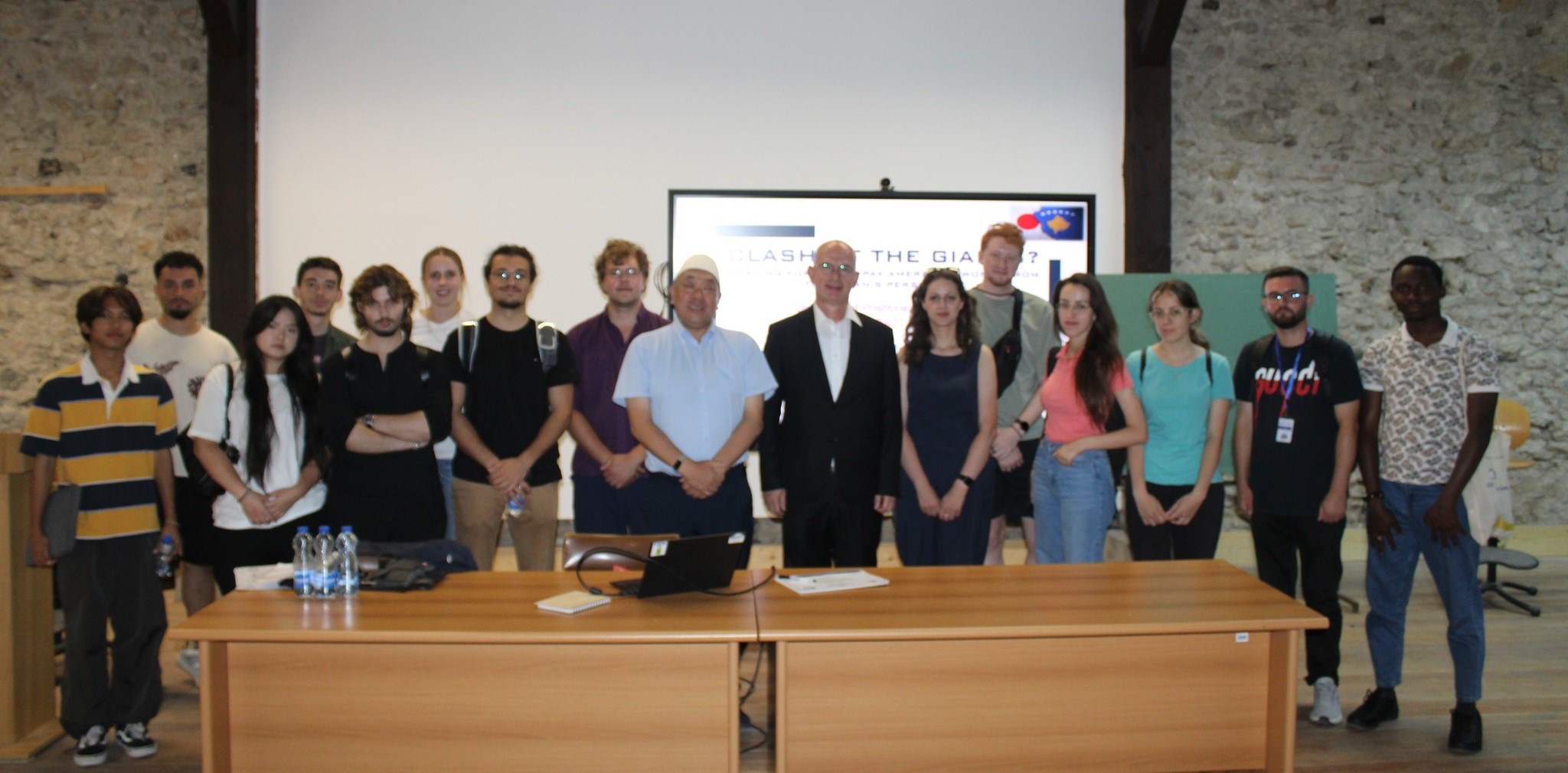
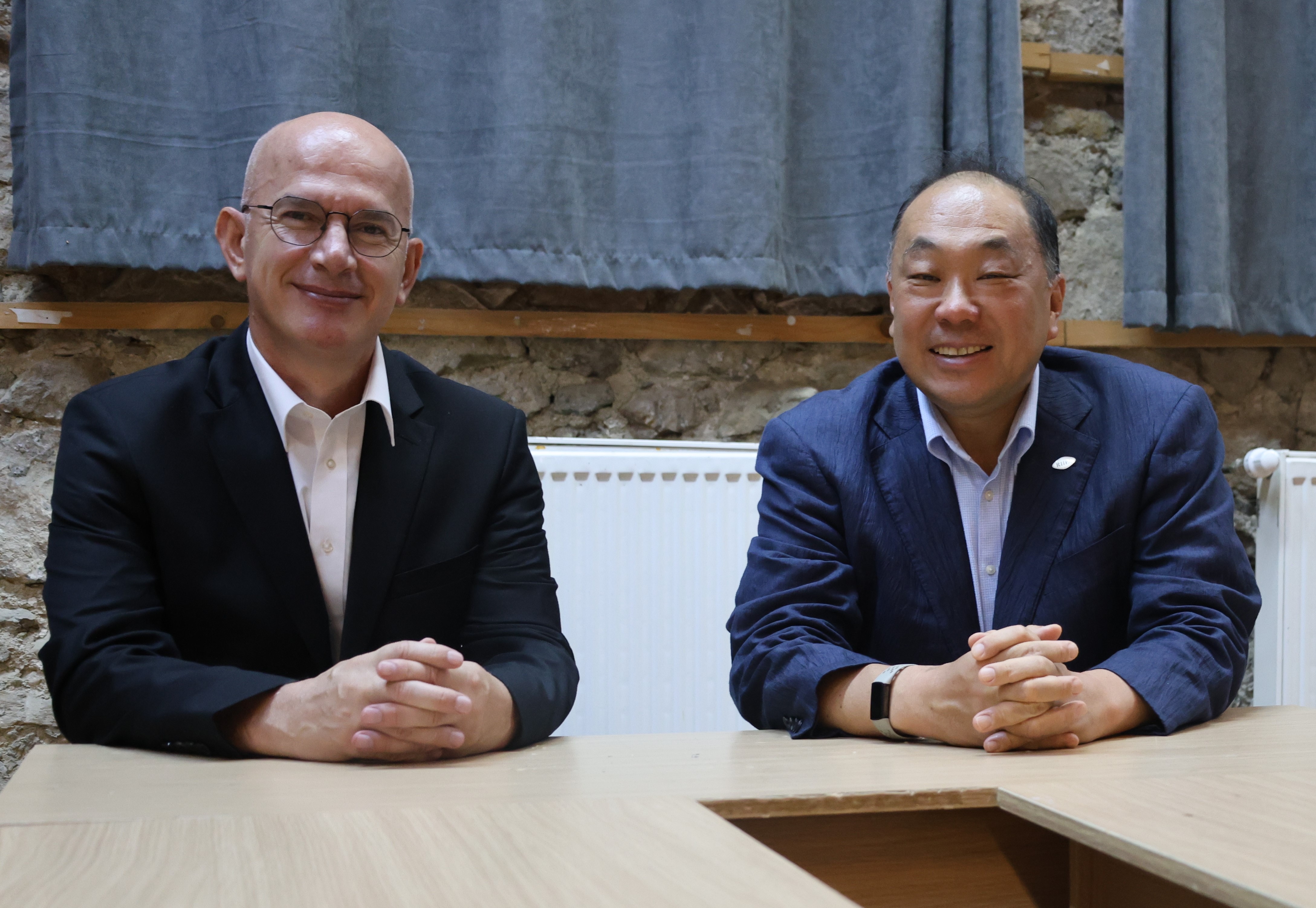
Tosh Minohara, a professor at Kobe University in Japan and a first-time participant in the International Summer University of Prishtina, says that Kosovo’s students and people must learn to attend meetings on time and have a common goal for their country.
Professor Sabri Kiçmari of the Faculty of Philosophy, who co-lectured with Minohara on Japan’s foreign and security policy over the past 150 years, mentions three important things that students from the University of Prishtina (UP) can learn through collaboration with Japanese university students:
“First, our students can learn a lot from Japanese discipline. Second, the Japanese have a trait of not giving up in the face of difficulties. Third, a sense of creativity—the Japanese are a very creative society,” explains Kiçmari.
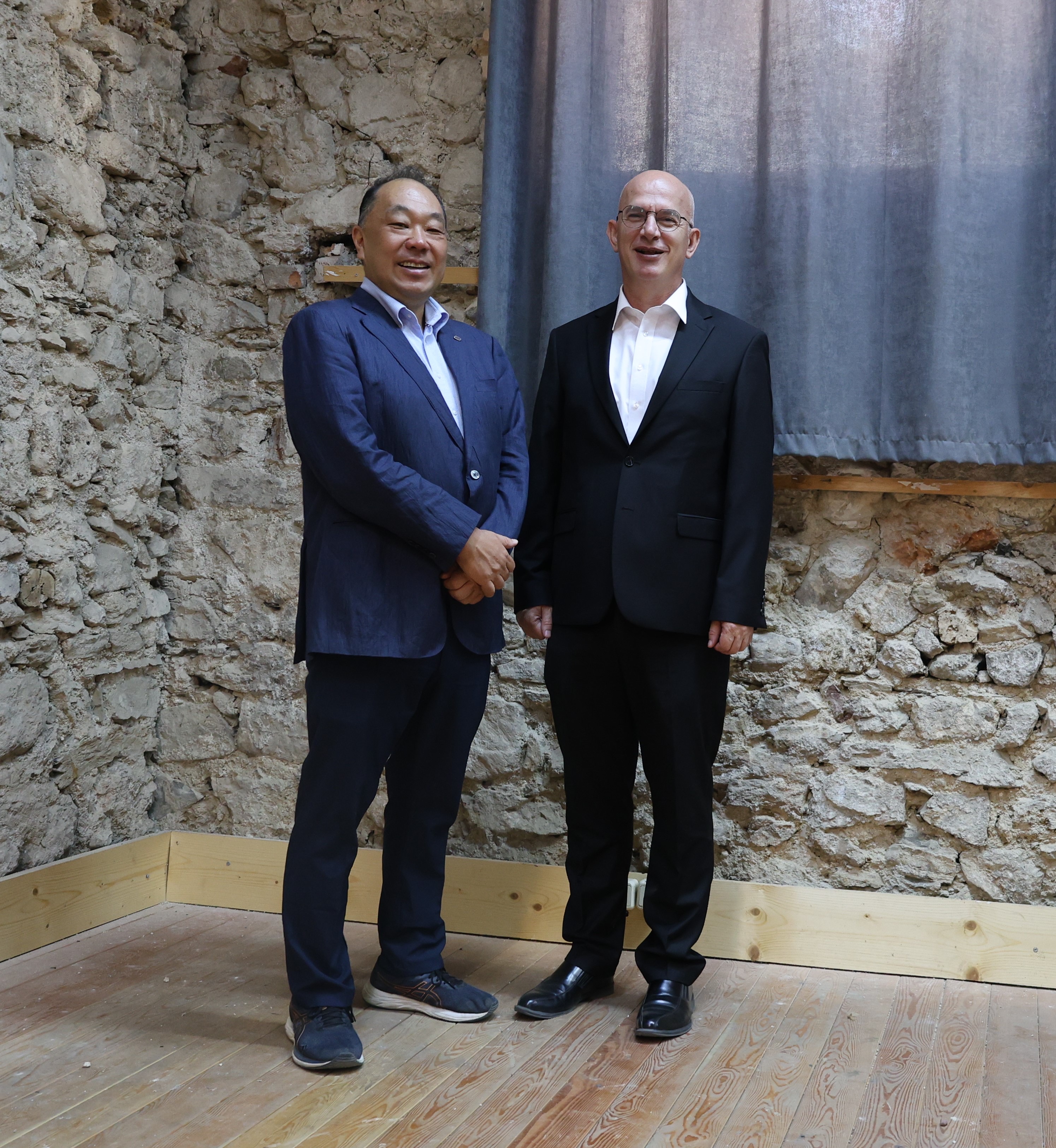
Both professors, who have known and collaborated since 2022, highly value the organization and joint participation of local and international professors and students at the Summer University.
“I think it was great to teach students from all over the world and interact with professors from other parts of the world. I think this is a great program. I’m glad I was able to participate,” says Professor Minohara.
“I think it’s a good idea. It is a very good form of interaction between cultures, societies, and different states. I believe it was interesting not only for the students but also for us who taught. It can continue in the future in this lecture-organizing format,” says Kiçmari.
Professor Minohara explains how he made his lectures engaging for Generation Z students:
“It was really easy because they were very interested in our lectures. I thought they were great students. How to remain engaging is just to give an interesting talk. What is very important is to explain to them why this relates to them,” says Minohara.
Professor Kiçmari also discusses how to approach lectures when students differ from one another in all aspects:
“With foreign students, alongside the topics you cover, you must also convey basic information that you assume they might not have. If all students were Japanese, it would have been much easier to discuss [Japan’s foreign and security policy] at a deeper level because they already possess the foundational knowledge,” says Professor Kiçmari.
Professor Minohara shares his impressions of Kosovo:
“I like everything. The people are fun, loving and very friendly. That part I like. Interacting with the people of Kosovo was interesting. I also saw the countryside. I went to many different cities, so that was nice,” says Minohara.
The Japanese professor also visited Podujeva, the hometown of his colleague, Kiçmari:
“We had a long drive out to his hometown, Podujevë, so I learned about his upbringing and his history. I learned about the importance of the war and independence, because there are memorials everywhere. That was really powerful. We visited the border. Oh, that border was interesting. We spoke with the border guards. That was fun,” explains Minohara.
Professor Kiçmari, who has also served as the Ambassador of the Republic of Kosovo to Japan for over three years, summarizes his lessons from the “Land of the Rising Sun” and his collaboration with Professor Minohara:
“Japan is a state built on the parameters of tradition combined with modernity. Japanese society is deeply connected to tradition, values family, and what is iconic about the Japanese is their emotional bond with their workplace, institution, or company. They exhibit a rare, extraordinary dedication not found at this level in other societies,” explains Ambassador Kiçmari.
Meanwhile, Professor Minohara briefly explains why Japan has succeeded:
“Japan has invested in people. That has lots of value, especially when you are resource poor, since people become the most important resource. The key way for Japan is harmony. It is the harmony that contributes to a very peaceful society with low crime rates. Education is also important. It’s not one single thing. There are a lot of things,” says Minohara.
Professor Kiçmari also reflects on the complexities of learning Japanese:
“Spoken Japanese has an admirable logic and structure and can be learned like any other language—it isn’t harder than others. But the written language is very difficult. For a foreigner to learn to write correctly in Japanese, many years are required,” says Kiçmari.
Professor Minohara notes similarities between Kosovo and Japan, particularly their reliance on alliances with the United States to counter unexpected challenges from neighbors:
“The most important thing is that Japan reconciled with the USA. The two countries are very, very close. Japan needs to really think about security policy. It is not surrounded by friends. In that regard, it is very similar to Kosovo. It isn’t easy, but you have to be aware of risks and prepare. Preparedness is key,” says Minohara, demonstrating his understanding of international politics.
Finally, after experiencing Kosovo’s cuisine, Professor Minohara shares advice:
“The food is really salty. I think the people of Kosovo should use less salt because it leads to high blood pressure and health issues. Everything is really salty—even the salad,” says Professor Minohara.
Gallery